When to switch jobs: 9 signs it is time, and what to do before you resign
How to know when to switch jobs, the right time to move in India, and a step-by-step list of what to do before you resign so your notice period and joining go smoothly.
"Should I switch my job?" is one of those questions people ask for six months before they do anything. Sometimes the answer really is "stay". Often it is "you already know, you are just scared of the paperwork".
Here is a clearer way to decide, and what to do once you have.
9 signs it is time to switch jobs
- You stopped learning a year ago. If you can do your job half asleep and nobody is offering you anything harder, your growth has stalled even if your salary has not.
- Your pay is clearly below market. Check a few recent offers people in your role and city have received. If the gap is large and your manager keeps saying "next cycle", that is your answer.
- Your best work goes unnoticed. If promotions keep going to people who are louder rather than better, the system is not built to reward you.
- Your manager is the problem, and is not leaving. Most people do not quit companies, they quit managers. If the relationship is broken, a team change may fix it. If not, a company change will.
- The company is wobbling. Repeated layoffs, delayed salaries or leadership churn are signals. Moving on your own terms beats moving after a layoff email. If that email has already arrived, read what to do when you are laid off.
- Your role is shrinking because of automation. If more of your work is being done by tools every quarter and you are not the one running those tools, plan your next step now. Our guide on AI and jobs in India covers which roles are growing.
- You dread Sunday evenings every single week. One bad week is normal. A year of them is information.
- There is no path you want. Look at the person two levels above you. If you do not want their job, you are climbing the wrong ladder.
- You have a clear reason to go somewhere specific. A better role, a better team, a sector you want to break into. "Towards something" is the best reason to switch.
3 bad reasons to switch
- One bad appraisal. Fix it first, or at least understand it. Leaving right after a bad review can follow you into reference checks.
- A 10 percent hike for the same work. Small hikes vanish quickly. Move for a bigger role, better learning or a real pay jump.
- Everyone else is moving. Your batchmates' LinkedIn updates are not a career plan.
When is the right time to switch jobs in India?
There is no perfect month, but a few patterns help:
- After your bonus or increment is paid, not just before. Check whether any bonus has a clawback clause if you leave within a set period.
- Before your next appraisal cycle locks your rating, if you already know you are leaving and the rating will not matter.
- When your notice period fits the new company's timeline. Many Indian companies have 60 to 90 day notice periods, so start interviewing early.
What to do before you resign
This is where a smooth switch is won or lost. Do these while you still have access to everything.
1. Get the offer in writing first
A signed offer letter with your role, salary breakup and joining date. Verbal offers do not count.
2. Download your documents while you still have access
Your company's HR portal and email usually lock the day you leave. Before you resign, save:
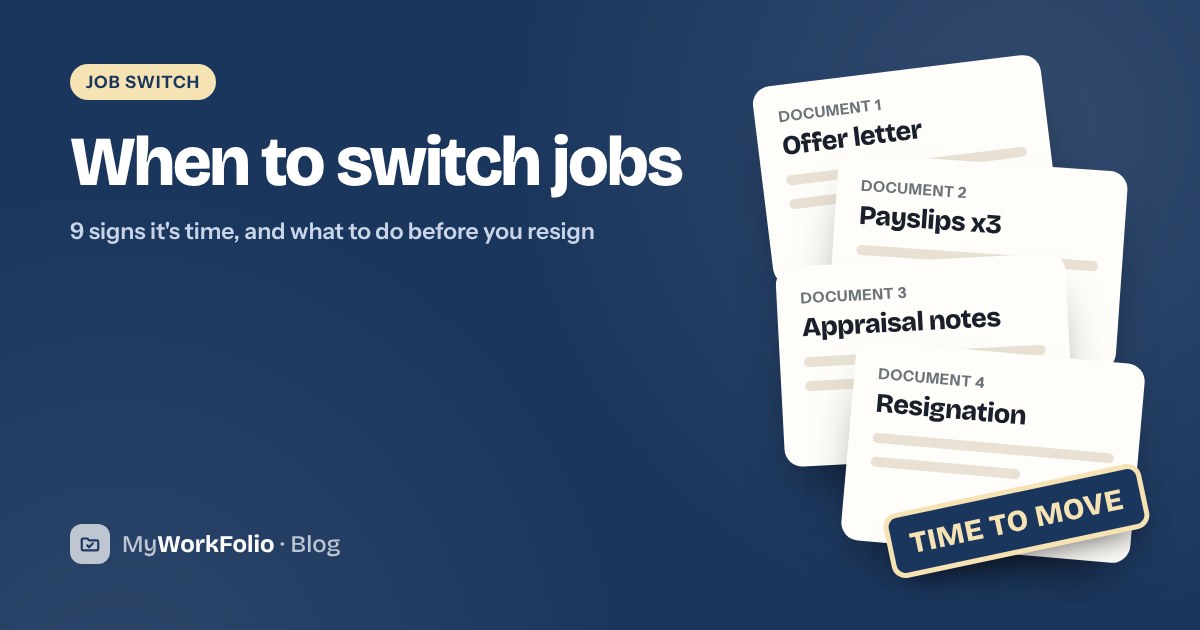
- Every payslip from at least the last 12 months
- Your latest Form 16 and anything showing TDS deducted this year
- Your offer letter, appointment letter and any increment or promotion letters
- Appraisal letters and performance reviews
This one step saves weeks later, because your new employer will ask for most of it. Here is the full list of documents required for joining a new job.
3. Write down what you achieved
Your memory of the last two years will fade fast. Spend an hour listing your wins with numbers before you leave. It helps in salary negotiation now and in interviews later. Our guide to keeping a brag document for appraisals shows the format.
4. Check your notice period and exit terms
Read your appointment letter for the notice period, whether it can be bought out, and what happens to unused leave. Under the new labour codes, final dues after resignation are meant to be paid within two working days of your last day, according to this explainer on the two working day rule.
5. Resign politely and in writing
Short email, clear last working day, thanks to your manager. Copy one of these resignation email templates. Ask HR to confirm in writing when you will receive your relieving letter and experience letter. See relieving letter vs experience letter for what each should say.
6. Hand over properly
A clean handover is the best reference you will ever get. People remember how you left more than how you joined.
Bottom line
Switch jobs when you are moving towards something, not just away from something. And before you resign, collect your documents and your wins while you still can. Future you, sitting with HR's joining checklist, will be very grateful.
MyWorkFolio keeps all of it in one private vault: payslips, letters, Form 16 and your wins. When the new HR email arrives, your joining pack is already built.
Frequently asked questions
How often should you switch jobs?
There is no fixed rule. Staying around two years or more in a role usually reads well on a resume because it shows you finished things. Several moves under a year in a row is what makes recruiters ask questions.
Should I resign before getting an offer letter?
Usually not. Resign after you have a signed offer letter in hand, and ideally after the new company has confirmed your joining date and any conditions like background verification.
Is it better to switch jobs after appraisal?
Often yes, if a bonus or increment is due soon, because leaving just before payout means walking away from money you have already earned. Check your appraisal cycle and any bonus clawback terms first.